
GLP-1 Drugs: What They Do, What the Risks Are, and What Your Body Can Do Naturally

Reviewed for accuracy. This article is for educational purposes only and is not intended as medical advice. Always consult your healthcare provider before starting, stopping, or changing any medication or supplement.
If you have watched the news, scrolled social media, or sat in a doctor's waiting room in the past year, you have almost certainly heard about GLP-1 drugs.
Ozempic. Wegovy. Mounjaro. Zepbound.
These medications have become the biggest health story of the decade. They are being called everything from a miracle to a revolution to the future of medicine.
But if you are someone managing type 2 diabetes, blood sugar challenges, or weight concerns — and especially if you are over 50 — you deserve more than headlines. You deserve the full picture.
This article will give you that. We will explain what GLP-1 drugs actually do, what the research shows about their benefits and risks, what natural alternatives exist, and how to have a more informed conversation with your doctor.
Whether you are considering a GLP-1 medication, already taking one, or exploring natural alternatives — this article is for you.
GLP-1 Drugs in 2026: A Quick Snapshot
The numbers tell the story of how fast this has grown.
Sources: RAND 2025, KFF 2025, J.P. Morgan 2026, FAIR Health 2025
With numbers like these, it is likely that you or someone you love is either taking a GLP-1 drug, considering one, or wondering whether there is another way. Let us start at the beginning.
What Is GLP-1 — And What Do These Drugs Actually Do?
GLP-1 stands for glucagon-like peptide-1. It is a hormone your body produces naturally. Every time you eat, cells in your intestines release GLP-1, and it does several important things:
But only when blood sugar is elevated — a built-in safety mechanism.
Reduces blood sugar spikes after meals.
So you feel full longer after eating.
Many users describe this as a quieting of "food noise."
This is a beautifully designed system. Your body releases GLP-1 in brief pulses that last about two minutes. It does its job quickly and then disappears. That is how the system was designed to work.
What the Drugs Do Differently
GLP-1 drugs like semaglutide (Ozempic, Wegovy) and tirzepatide (Mounjaro, Zepbound) are synthetic versions of this hormone. But there is one critical difference: drug manufacturers figured out how to extend GLP-1's life from two minutes to an entire week.
Instead of brief, targeted pulses, these drugs provide constant, around-the-clock stimulation of the GLP-1 receptors.
Natural GLP-1 vs. GLP-1 Drugs
Same hormone. Very different delivery.
Released in brief pulses after eating. Quick signal, then gone. Your receptors get a break between meals.
One injection provides constant stimulation for a full week. Your receptors never get a rest.
As Dr. Scott Saunders, M.D. explains it: natural GLP-1 is like a text message — quick, targeted, and gone. The drug version is like receiving a ten-page text that never stops. Eventually, your cells start to tune it out.
This distinction matters because many of the benefits — and many of the risks — stem from this fundamental difference.
The Benefits: What the Research Shows
We want to be honest about this: GLP-1 drugs do work. For many people, they produce meaningful results in the short term.
These are real benefits, and for people with serious metabolic conditions, these drugs can be a valuable tool. We are not here to dismiss that.
But benefits are only half the picture.
The Risks: What You Need to Know
Because GLP-1 drugs override a system your body designed to operate in brief pulses, the constant stimulation creates a range of side effects and concerns that deserve serious attention — especially if you are over 50 and managing other health conditions.
75% of people who start GLP-1 drugs end up stopping them.
The most common reasons? Cost, side effects, and — for many — the weight comes back. According to a KFF poll, about half of GLP-1 users say the drugs are difficult to afford, 14% stopped specifically because of cost, and 13% stopped due to side effects. Understanding these realities before you start is part of making an informed decision.
Nausea, Vomiting, and Digestive Distress
The most common side effects. According to a RAND survey, about half of GLP-1 users report nausea and one-third report diarrhea. Some develop gastroparesis — a condition where the stomach becomes partially paralyzed.
Up to 40-50% of Weight Lost Is Muscle
This may be the most underreported risk. GLP-1 drugs block anabolic metabolism, meaning a significant portion of the weight you lose is lean muscle mass — not just fat. For people over 50, muscle loss accelerates metabolic decline and increases fall risk.
Weight Regain After Stopping
Nearly all patients regain weight after stopping GLP-1 drugs — sometimes exceeding their original weight. About 75% of users report discontinuing the drug. This suggests a metabolic dependency, not a lasting solution.
Dopamine and Mood Effects
Appetite suppression can disrupt your brain's reward circuitry over time. Some users report lethargy, apathy, or mood changes. The FDA and European agencies are monitoring for potential mental health effects.
Pancreas, Gallbladder, and Thyroid Concerns
Clinical data shows elevated risks for pancreatitis and gallbladder disease. A thyroid cancer black box warning exists based on animal studies. These hormones act broadly across multiple organs — and the full long-term consequences are still unknown.
Your Body May Stop Responding
With constant stimulation week after week, your GLP-1 receptors can become desensitized — meaning the drug may gradually lose effectiveness. Your body tries to rebalance what the drug is overriding.
These drugs work by altering fundamental metabolic signaling your body evolved to maintain balance. Because of that imbalance, the body tries to restore equilibrium — which is why the drugs can lose effectiveness and why stopping them often leads to rebound.
— Adapted from Dr. Scott Saunders, M.D.
A Longer Pattern Worth Knowing
GLP-1 drugs are not the first "breakthrough" in weight loss. Dr. Saunders points out that there is a pattern worth recognizing:
The Weight Loss Drug Pattern
This does not mean GLP-1 drugs will follow the same path. But history suggests caution and informed decision-making are always wise.
If You Are Considering (or Already Taking) GLP-1 Drugs
If you and your doctor decide that a GLP-1 medication is right for you, these principles — adapted from Dr. Saunders' clinical guidance — can help you use them more safely and protect your long-term health.
Stay at the starting dose for at least 4-6 weeks. Never rush to the "full dose" just because it is printed on the pen. If nausea returns at a higher dose, step back.
This is critical, especially over 50. Aim for around 100 grams of protein daily and resistance training 3-5 times per week. Muscle loss drives long-term metabolic decline and makes weight regain more likely.
With appetite reduced, every bite counts. Focus on protein, cruciferous vegetables, fiber, and hydration with electrolytes. Avoid processed sugar, alcohol (especially within 48 hours of injection), and high-fat meals that intensify nausea.
Appetite suppression can quietly affect your mood and dopamine levels over time. Stay active, get sunlight, maintain social connections, and tell your doctor if you experience lethargy, apathy, or mood changes.
These drugs are not designed to be taken forever, but stopping abruptly often leads to rebound. Work with your doctor on a gradual tapering plan. Build lifestyle habits while on the medication so they carry you when you stop.
Supporting GLP-1 Naturally
Here is the question many people are asking: is there a way to support your body's own GLP-1 production without the drugs?
The answer, based on a growing body of research, is yes — though the effects are more modest than pharmaceutical GLP-1 drugs. Natural approaches work with your body's existing system rather than overriding it.
Berberine: The Most Studied Natural GLP-1 Supporter
Berberine is a natural plant compound that has been the subject of extensive clinical research. Multiple studies have found that berberine can stimulate your body's own GLP-1 production through several mechanisms:
Activates bitter taste receptors in the gut that trigger GLP-1 release, according to a study published in Biochemical Pharmacology
Promotes beneficial gut bacteria that produce short-chain fatty acids, which in turn stimulate GLP-1 secretion from intestinal L-cells
Protects intestinal L-cells from mitochondrial stress, helping them function properly, according to research published in Nutrition and Diabetes
Reduces blood sugar, HbA1c, and inflammatory markers in clinical trials involving over 3,000 patients
The key difference: berberine supports your body's natural, pulsed GLP-1 production rather than flooding your receptors with a synthetic version 24/7. Your body stays in control.

Barton's Berberine — Natural GLP-1 Support
Support your body's own GLP-1 production naturally.
Doctor-formulated berberine backed by clinical research. Supports healthy blood sugar, metabolic health, and natural GLP-1 activity without constant receptor stimulation.
Learn More About BerberineOther Natural Ways to Support GLP-1
High-Fiber Foods
Fiber feeds gut bacteria that produce short-chain fatty acids, which stimulate GLP-1 release. Think vegetables, legumes, and whole grains.
Protein-Rich Meals
Protein triggers more GLP-1 release than carbohydrates or fat. Eating protein first at each meal naturally supports the response.
Fermented Foods
Yogurt, kefir, kimchi, and sauerkraut support the gut bacteria that help produce GLP-1. A healthy microbiome is a GLP-1-friendly microbiome.
Regular Movement
Exercise improves insulin sensitivity and supports healthy GLP-1 signaling. Even daily walking makes a measurable difference.
Natural GLP-1 support will not produce the dramatic, rapid weight loss of pharmaceutical drugs. But it works with your body instead of overriding it — and it does not come with receptor desensitization, muscle loss, or rebound weight gain.
Questions to Ask Your Doctor
Whether you are considering GLP-1 drugs, already taking them, or exploring natural alternatives, these questions can help you have a more informed conversation with your healthcare provider:
Is a GLP-1 drug appropriate for my specific health situation — or are there alternatives worth trying first?
What is the plan for monitoring side effects, especially GI issues and muscle mass?
How much protein should I be eating and should I be doing resistance training?
What happens when I stop taking the medication? What is the exit plan?
Could natural approaches like berberine, dietary changes, or exercise support my GLP-1 levels before or instead of medication?
What are the long-term risks we still do not know about with these drugs?
The Bottom Line
GLP-1 drugs do work for blood sugar and weight loss in the short term. That is not in dispute.
They come with significant risks including muscle loss, GI distress, receptor desensitization, and weight rebound after stopping.
The long-term consequences of chronic GLP-1 receptor stimulation are still largely unknown.
Natural compounds like berberine support your body's own GLP-1 production without overriding the system.
The best decision is an informed decision — made with your doctor, based on the full picture, not just the headlines.
Your body already knows how to produce GLP-1.
Sometimes it just needs the right support.
If you are looking for natural ways to support healthy blood sugar, GLP-1 production, and metabolic balance, these are the supplements our team and Dr. Saunders recommend.
What We Recommend
Berberine
Natural GLP-1 support
Supports your body's own GLP-1 production through gut bacteria and bitter taste receptor activation. Clinically studied across 37 trials involving over 3,000 patients for blood sugar, A1C, and key inflammatory markers like CRP and IL-6.
Doctor-formulated by Dr. Scott Saunders, M.D.
Learn More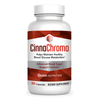
CinnaChroma
Blood sugar + insulin support
Our #1 bestseller. A 6-in-1 formula featuring Ceylon cinnamon bark extract, chromium picolinate, vanadium, Vitamin D3, Vitamin K2, and selenium — designed to support healthy glucose metabolism and restore insulin function.
Doctor-formulated by Dr. Scott Saunders, M.D.
Learn More
Fiber Greens
Gut health + GLP-1 support
Fiber is one of the most effective natural GLP-1 triggers. It feeds the gut bacteria that produce short-chain fatty acids, which directly stimulate GLP-1 release from intestinal L-cells. Fiber Greens also supports digestion, blood sugar balance, and daily energy.
Just one scoop daily. Mix with water or a smoothie.
Learn MoreFree US Shipping Over $100 | 90-Day Money-Back Guarantee
References (click to expand)
GLP-1 Drug Statistics
1. RAND Corporation (2025). "New Weight Loss Drugs: GLP-1 Agonist Use and Side Effects in the United States." PMC
2. KFF (2025). "1 in 8 Adults Say They Are Currently Taking a GLP-1 Drug." KFF
3. J.P. Morgan (2026). "How Supply and Demand for Weight Loss Drugs is Playing Out in 2026." J.P. Morgan
GLP-1 Drug Research
4. Drucker DJ, et al. (2026). "GLP-1 receptor agonists and next-generation incretin-based medications." The Lancet. Lancet
5. American Diabetes Association (2024). "Efficacy and Safety of GLP-1 Medicines for Type 2 Diabetes and Obesity." Diabetes Care. Diabetes Care
GLP-1 Risks and Practical Guidance
6. Dr. Scott Saunders, M.D. "GLP-1 Drugs for Weight Loss: 12 Shocking Long-Term Risks." Home Cures That Work
7. Dr. Scott Saunders, M.D. "8 Principles for Using GLP-1 Medications Safely in Type 2 Diabetes." Home Cures That Work
Natural GLP-1 Support
8. Yu, Y., et al. (2015). "Berberine induces GLP-1 secretion through activation of bitter taste receptor pathways." Biochemical Pharmacology. PubMed
9. Sun, Y., et al. (2018). "Restoration of GLP-1 secretion by berberine." Nutrition and Diabetes. Nature
10. Araj-Khodaei, M., et al. (2024). "Berberine-induced GLP-1 and its mechanism for controlling type 2 diabetes." Archives of Physiology and Biochemistry. PubMed
*These statements have not been evaluated by the Food and Drug Administration. This product is not intended to diagnose, treat, cure, or prevent any disease.*
Related Articles:
Berberine: What the Research Actually Says
How to Lower Blood Sugar Naturally
Heart Health 101: Cholesterol, Blood Pressure, and Inflammation


